


Understanding BC.Game Crash Online Login
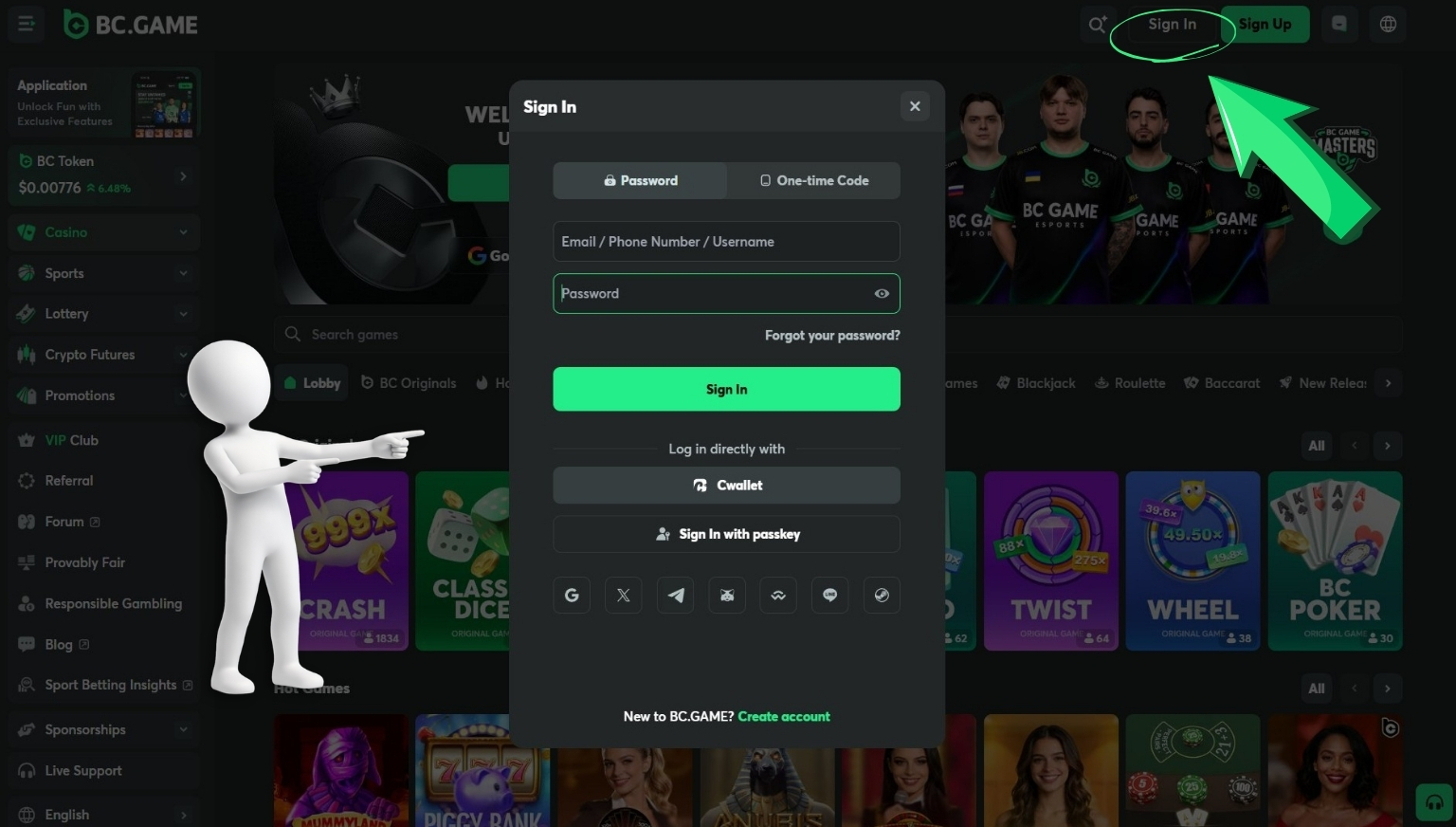
- The login page on BC.Game sits at the top of the site. A button labelled “Sign In” or similar opens the form. The form shows up as an overlay or a dedicated page depending on the device and the current site version.
- The page itself is straightforward. A field for the email or username. A field for the password. Below those, icons for social login options and wallet-based login. Links for password recovery and new account creation sit nearby.
- Before typing anything into the form, look at the address bar. The domain should be BC.Game’s actual domain. Phishing pages clone the login screen down to the last pixel. The fields look right. The buttons look right. The logo looks right. The URL doesn’t. That’s the only visible difference, and it’s the one most people skip.
- Bookmarked the site? The bookmark always loads the correct domain. Following a link from a search result or a message? That link could point anywhere.
Login Interface Overview
The form has a few moving parts.
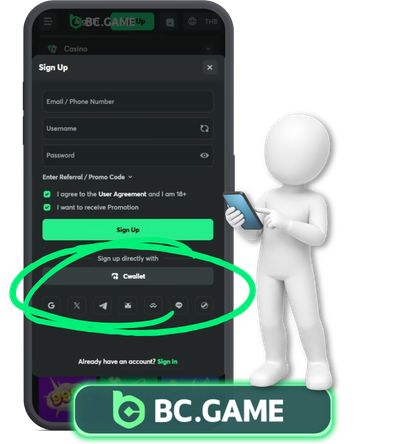
- Email/username field at the top. The player types in whichever identifier was used during registration. Some accounts use an email address. Others use a phone number. The field accepts both.
- Password field below it. Standard masked input — dots instead of characters. A toggle icon reveals the text for a moment to check for typos before submitting. On a phone keyboard where “o” and “0” live next to each other, that toggle saves time.
- Social login icons underneath. Google, Facebook, Twitch, Line — each one opens the respective service’s authentication flow. The player approves the connection, and the session opens without typing a separate BC.Game password. One fewer credential to manage.
- Wallet login for crypto-native users. A Web3 wallet connection option that skips email entirely. The wallet signs a verification request. The session opens. No password involved.
- After the credentials go in — whichever method was used — the platform may ask for a 2FA code. Six digits from an authenticator app. Changes every thirty seconds. Enter the current one. The session opens to the full platform, Crash included.
Account Recovery Options for BC.Game Crash Login
Locked out? The recovery link is on the login page itself. The tricky part isn’t finding it — it’s making sure the email address goes in correctly. One typo and the reset link flies into an inbox that doesn’t belong to anyone. Spam folders eat these emails too. If the reset doesn’t show up within a few minutes, check there before requesting another one.
Phone-number accounts get a code by SMS instead. Same idea, different delivery.
The whole recovery process runs through BC.Game. Nobody outside the platform should be part of it. A Telegram account offering to “help recover” a BC.Game login is offering to steal it.
Resetting Passwords Safely
The reset link lands in the email. It leads to a page on BC.Game where the new password goes in. Worth glancing at the address bar here too — phishing pages mimic reset forms just as easily as login forms.
Pick something the old password doesn’t resemble. Not the same word with a number swapped. A fresh string. If it could be guessed from the old one, it’s not fresh enough.
Once the new password is set, every previous session dies. Browser, app, any device that was still logged in — all of them get kicked out. Log in on the main device with the new password. If 2FA got disconnected during the process, reconnect it before doing anything else.
Common BC Game Crash Login Issues
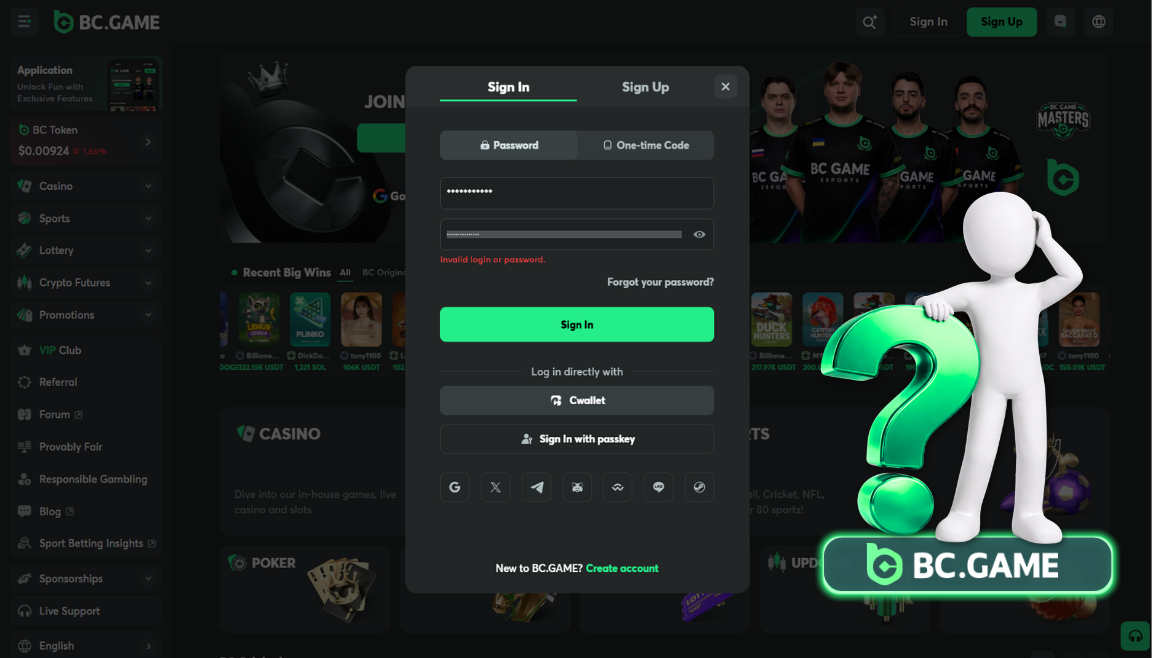
- Wrong password. The champion of login problems. Phone keyboards are small. Autocomplete fills in an outdated password. Characters that look alike on certain screens cause silent typos. Retyping carefully while watching each character usually solves it.
- Account locked after failed attempts. Several wrong entries in a row trigger a temporary freeze. The freeze lifts on its own after a waiting period. Trying again immediately extends the wait. Walk away. Come back in fifteen minutes.
- 2FA code rejected. The authenticator code cycles every thirty seconds. Entering a code that just expired — because it took too long to switch between apps — results in rejection. Grab the fresh code. Type it quickly.
- Regional access issues. BC.Game restricts access from certain countries. If the platform doesn’t load or the login fails with a generic error, the restriction may be the cause. The platform’s terms describe which regions are blocked.
- KYC-related holds. Some accounts get restricted during verification processes. A login might work but certain features — withdrawals, in particular — stay locked until verification clears. The platform’s support handles these cases.
- Browser or app problems. Old cached data from a previous version of the site can mess with the current login. Incognito mode sidesteps cached data entirely — if login works in incognito but not in the regular window, the cache is the culprit. Clear it for the site and try again.
Keeping the BC.Game Crash Account Locked Down
The balance behind this login is crypto. Crypto that left the account doesn’t come back through a bank dispute. A compromised account can be drained in the time it takes to make coffee. The precautions here carry more weight than on platforms where a card company can claw back a fraudulent charge.
HTTPS padlock in the address bar. Missing? Close the tab.
One password for this account. Nowhere else. Not a remix of something already in use. Something that would mean nothing to a person reading it over a shoulder.
2FA through an authenticator app. Every login. Every withdrawal. Without the six-digit code, a stolen password is a stolen half of nothing useful.
A player who logged in at a friend’s place last week and forgot to log out left that session open. Anyone who picks up that phone can access the account. Log out manually on anything that isn’t the player’s own device. And those “your account needs verification” messages that show up in email or chat? Ignore them. The platform doesn’t send those through random channels.
Responsible Account Usage for Crash Game Login
Crash rounds are fast. A few seconds each. The multiplier climbs. The plane can fly away at any moment. The pace creates urgency. That urgency, compounded across dozens of rounds, can push spending past the point that felt comfortable at the start of the session.
The platform offers self-exclusion tools. Deposit limits. Session time reminders. These sit in the account settings and can be configured after the crash game login. Setting them up during the first session — when the thinking is clear and the balance is untouched — means they’re active before the first heated moment arrives.
Crash on BC.Game has features that extend sessions if the player isn’t careful. Trenball betting adds side bets on the colour of the crash coefficient — Red for crashes under 2x, Green for 2x and above, Yellow for 10x and above. Each Trenball bet is an additional wager on top of the main bet. Scripts automate the betting process entirely, running strategies without manual input between rounds. Both features are powerful. Both features need conscious limits, because they remove the natural pauses that manual play builds in.

A session that runs on scripts doesn’t stop until the script’s conditions are met or the balance runs out. That’s by design. But it also means the player who set the script and walked away might return to a very different balance than expected. Scripts don’t think. They execute. The thinking has to happen before the script starts.
Backup and Account Monitoring
The authenticator app lives on the phone. Phone dies, gets stolen, gets dropped in water — the codes die with it. During 2FA setup, the platform shows a recovery key. That key should end up somewhere that isn’t the same phone. A written note in a drawer. A password manager on a laptop. Anywhere that survives the phone being gone. Without that key, getting back into the account means a support ticket and a wait.
The account settings page has a session log. Every login recorded — timestamp, device type, rough location. Worth scrolling through once a week. A login entry from a city the account owner has never visited is the kind of thing that deserves a password change and a support message the same day. Not next week. Same day.
Some platforms send email alerts when a login or withdrawal happens. If that option exists in the settings, turning it on adds a tripwire. A withdrawal alert that nobody in the household initiated means someone else is moving money. Change the password. Kill active sessions. Reach out to support. Do all of it before asking how it happened.